Brain waves & sleep stages
Small electrodes on the head and face record brain waves, eye movements and muscle activity. These signals show when you are asleep, your sleep stages and brief awakenings.

SNORING & OBSTRUCTIVE SLEEP APNOEA
Loud snoring, pauses in breathing or waking unrefreshed can be signs of obstructive sleep apnoea (OSA). A sleep study can help investigate what happens to your breathing overnight. Contact our Shellharbour or Corrimal team about home sleep testing, with the convenience of sleeping in your own bed. We’ll explain the process and referral requirements; your clinician will assess whether home testing is suitable.
UNDERSTAND YOUR SLEEP
Snoring happens when tissues in the throat vibrate during sleep. It can also be a sign of obstructive sleep apnoea, where the upper airway repeatedly narrows or closes and interrupts breathing. You may not notice these events yourself, but a partner may hear snoring or see breathing pauses. Disrupted sleep can leave you unrefreshed, tired or struggling to stay awake during the day. Speak with your GP about your symptoms and whether an overnight sleep study is appropriate.
Based on patient information from Australia’s Sleep Health Foundation: Obstructive sleep apnoea · Excessive daytime sleepiness.
Daytime sleepiness has many possible causes, including too little sleep, sleep habits and physical or mental health conditions. Seek medical advice if it persists without an obvious explanation. Do not drive when sleepy.
Nox Medical

MEET NOX
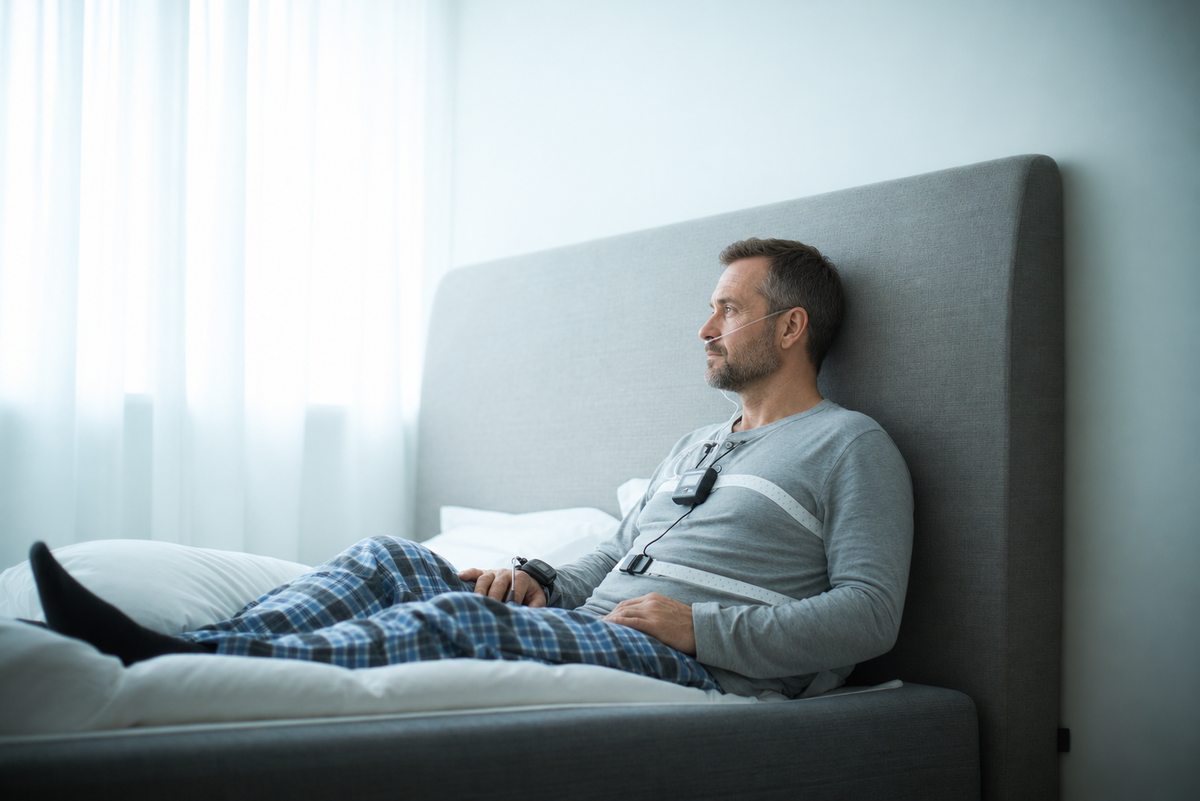
The Nox A1 is a small, battery-powered recorder worn on your clothing overnight. With a full Level 2 sensor setup, it records sleep as well as breathing, helping a sleep physician investigate breathing interruptions and disrupted sleep. Sensors connect to your head and body, but you are not tethered to a hospital bedside. Our sleep technician fits the recorder and sensors and completes the full setup for you, then explains how to care for the equipment overnight.
Small electrodes on the head and face record brain waves, eye movements and muscle activity. These signals show when you are asleep, your sleep stages and brief awakenings.
A nasal cannula measures airflow, while chest and abdominal belts record breathing effort. Together, these signals help the clinician assess pauses and reductions in breathing.
An oximeter measures blood oxygen levels, and heart monitoring records pulse or ECG. These signals show how breathing changes affect your body overnight.
The recorder can capture snoring and body position; additional sensors may record leg movements. The clinician checks how events relate to posture and sleep stage.
WHAT TO EXPECT
Describe your snoring, tiredness, sleepiness and medical history to your GP. Screening questionnaires may help guide referral. Confirm the recommended study type, referral requirements, fees and any Medicare rebate with the provider before booking.
Our sleep technician fits all the sensors and sets up the equipment for your home sleep study. You won’t need to fit the sensors or set up the equipment yourself. Before you leave, we’ll explain what to expect overnight, how to care for the fitted equipment and when to return it.
Follow your provider’s overnight instructions and note your bedtime, final waking time and any problems. Return the recorder and oximeter at the arranged time. A sleep scientist scores the recording and a sleep physician reviews it. Discuss the report with your referring doctor, including the diagnosis, severity and next steps.
YOUR SLEEP · YOUR NEXT STEP
Answer every question in either adult screening form to see your score. These questionnaires screen for risk; they do not diagnose sleep apnoea. Your answers are calculated on this page and are not sent to our team.
For adults only. Results are not a diagnosis, referral or confirmation of Medicare eligibility. A lower score does not rule out a sleep disorder. Discuss symptoms and results with your GP. Do not drive when sleepy. OSA50 was not validated in pregnancy or people previously treated for OSA, or with significant cognitive impairment or poorly controlled psychiatric illness.
Talk to our team about your results ↗A LITTLE MORE CLARITY
Level 1 is attended in a sleep laboratory. Level 2 records comprehensive sleep and breathing signals without overnight attendance. Simpler Level 3 and 4 tests record fewer signals and generally do not measure sleep stages directly. Home testing is not suitable for everyone; complex medical conditions or suspected other sleep disorders may require laboratory assessment.
No. Snoring can occur with or without sleep apnoea. Loud snoring together with breathing pauses, gasping, unrefreshing sleep or daytime sleepiness warrants medical assessment. A clinician uses your history and appropriate testing to make a diagnosis.
A rebate may be available when the relevant MBS requirements are met. Referral pathways, clinical assessment and eligibility criteria apply. Medicare eligibility does not automatically mean no out-of-pocket cost. Ask the provider to confirm your referral, rebate and total fee before booking.
The report brings together your sleep stages, breathing events, oxygen levels and other recorded signals. It can help the sleep physician assess whether sleep apnoea is present, its type and severity. Your doctor considers the recording alongside your symptoms and health history before recommending treatment.
A home study can be affected by detached sensors or an unusual night. Persistent symptoms still need review, even if a result seems reassuring. Your doctor may recommend another study, laboratory testing or assessment for other causes of tiredness and sleepiness.
LET’S TALK ABOUT YOUR SLEEP
Contact our team about local testing options, or speak with your GP about persistent snoring, tiredness and daytime sleepiness. Confirm which study is being offered and how your results will be reviewed.
Patient information: Nox home sleep testing · Sleep Health Foundation: sleep studies · Health Dynamics: Nox A1 home study preparation · Healthdirect: sleep apnoea · Australasian Sleep Association: study guidelines · Medicare referral information
General information only. Diagnosis and treatment decisions belong with your qualified healthcare professional.